


Complete Guide for Bed Sheet Folding Machine: Technology, Benefits & Selection Tips
This article is written by JUJIN (a manufacturer specializing in non-woven converting machine solutions). The hospitality and healthcare industries increasingly depend on automated folding solutions to maintain operational efficiency while managing high-volume textile processing demands. Modern bed sheet folding machine technology has transformed from simple mechanical folders into sophisticated servo-driven systems capable of processing thousands of pieces per hour with remarkable precision.
Key Takeaways
Bed sheet folding machines can increase productivity by 60-70% compared to manual folding operations
Servo-controlled systems offer precise folding patterns with speeds reaching 80-120 meters per minute
Hotels implementing automated folding reduce labor costs by approximately 40-50% annually
Modern machines handle multiple sizes from 1200mm to 3300mm width with programmable fold patterns
ISO 10472-5 compliance ensures safety standards for industrial laundry folding equipment
What Is a Bed Sheet Folding Machine and Why It Matters
A bed sheet folding machine represents specialized industrial equipment designed specifically for automatically folding flat textile items.
These machines serve as essential components in commercial laundry operations.
The equipment receives linens from ironing machines and transforms flat sheets into neatly folded stacks ready for storage or distribution.
Hotel chains processing 500-2000 bed sheets daily cannot maintain competitive turnaround times without automation.
Manual folding requires approximately 45-60 seconds per sheet, while automated JUJIN bed sheet folding machine systems complete the same task in 3-5 seconds.
This dramatic time reduction directly impacts room turnover rates and guest satisfaction scores.
According to industry research on hotel linen management, properties implementing automated folding systems report 40-50% reduction in linen processing labor costs.
Healthcare facilities managing infection control protocols particularly benefit from minimizing human contact with processed textiles.
The consistent folding dimensions ensure efficient storage utilization and streamlined inventory management.
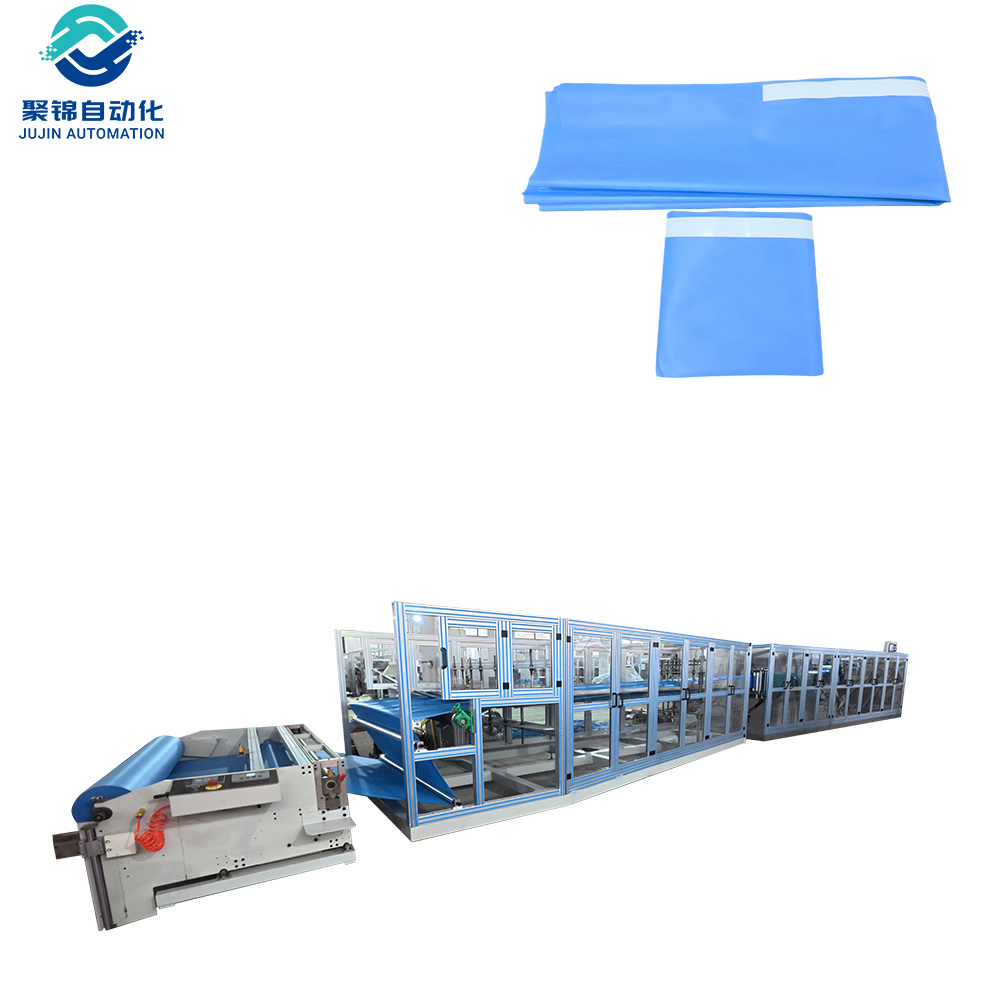
Core Technology Behind Modern Bed Sheet Folding Machines
Understanding the technological foundation helps buyers make informed equipment decisions.
Servo Motor Control Systems
Contemporary machines utilize multiple servo motors coordinating precise movements.
Each folding axis operates independently with programmable positioning accuracy within ±2mm tolerance.
Five to ten servo motors typically power a complete folding machine system.
These motors control fabric feeding speed, folding blade timing, and stacking operations simultaneously.
According to JUJIN's engineering experience, servo-driven systems demonstrate 30% better energy efficiency compared to pneumatic alternatives.
Photoelectric Detection Technology
Optical sensors detect sheet edges with millisecond response times.
E3F-DS30C1 sensors commonly used in industrial applications provide reliable edge detection.
The detection system measures sheet length automatically and adjusts fold positions accordingly.
This eliminates manual measurement requirements and prevents misaligned folds.
Advanced systems incorporate fabric tension monitoring to prevent stretching during high-speed operations.
PLC and Touch Screen Interfaces
Programmable Logic Controllers store up to 30 different folding programs.
Operators switch between king-size sheets, queen-size bedding, and standard pillowcases through touchscreen menus.
MCGS touch panels display real-time production counts, error codes, and diagnostic information.
English-language interfaces facilitate operation in international hotel chains and export markets.
Based on JUJIN's customization experience, cloud connectivity options enable remote monitoring and preventive maintenance scheduling.
Types of Bed Sheet Folding Machines Explained
Different operational requirements demand specific machine configurations.
Crossfold Machines for Horizontal Folding
Crossfold units perform perpendicular folds across sheet width.
Two to four cross folds typically reduce a 2400mm sheet to 600mm width.
These machines handle bath towels, hand towels, and small textile items efficiently.
Processing speeds reach 1000-1200 pieces per hour for towel-sized items.
Lengthfold Systems for Longitudinal Processing
Lengthfold machines create folds parallel to sheet length.
Hospital bed sheets require lengthwise folding for efficient cart storage.
The longitudinal blade mechanisms operate with pneumatic cylinders or servo actuators.
JUJIN's patented horizontal folding technology prevents material jamming at speeds exceeding 100 meters per minute.
Combination Folders for Multi-Pattern Capability
Full-function machines integrate both crossfold and lengthfold operations.
A typical configuration performs two horizontal folds followed by three vertical folds.
This produces compact packages suitable for automated bagging systems.
Hotels processing diverse linen sizes benefit from programmable fold pattern flexibility.
Integration with upstream ironing equipment creates continuous production lines.
Performance Comparison Table
| Machine Type | Processing Speed | Fold Patterns | Ideal Application |
|---|---|---|---|
| Crossfold Only | 800-1200 pcs/hour | 2-4 horizontal folds | Small towels, washcloths |
| Lengthfold System | 60-80 m/min | 1-2 lengthwise folds | Long tablecloths, bed runners |
| Full Combination | 50-120 m/min | 2 horizontal + 3 vertical | Hotel bed sheets, surgical drapes |
| High-Speed Industrial | 100-150 m/min | Programmable patterns | Large-scale laundries |
Key Benefits of Implementing Automated Folding Systems
Quantifiable advantages extend beyond simple labor savings.
Labor Cost Reduction and Workforce Optimization
A single operator manages automated folding lines replacing 4-6 manual folders.
Annual labor savings for a 200-room hotel typically exceed $80,000-120,000.
Staff reallocate to higher-value tasks like quality inspection and guest service.
Reduced physical strain decreases workplace injury claims and associated costs.
According to research on automation in textile manufacturing, companies report 70% reduction in repetitive motion injuries after implementing folding automation.
Consistency and Quality Standards
Automated systems deliver identical fold dimensions across all shifts and operators.
Storage shelves accommodate standardized stack sizes improving space utilization by 25-30%.
Housekeeping staff complete room setups faster with uniformly folded linens.
Guest-facing presentation maintains brand standards across all properties in hotel chains.
JUJIN's experience shows that consistent folding reduces storage space requirements by approximately 28% compared to manual operations.
Hygiene and Contamination Control
Automated handling minimizes human contact with processed linens.
Hospital laundries processing infection-controlled textiles require touchless systems.
Stainless steel construction permits chemical sanitization between processing cycles.
The closed processing environment prevents airborne particle contamination.
Healthcare facilities report 40-60% reduction in linen recontamination incidents after automation implementation.
Production Speed and Throughput Capacity
Modern machines process 500-800 king-size sheets per hour.
A 48-hour continuous operation test validates reliability under peak load conditions.
Quick changeover between sheet sizes requires less than 5 minutes program switching.
Integration with upstream ironers and downstream stackers creates 24/7 operation capability.
Critical Selection Factors for Buying Bed Sheet Folding Machines
Proper equipment selection prevents costly mismatches between capability and requirements.
Maximum Processing Width Specifications
Machine capacity must exceed your largest textile dimensions.
Standard hotel sheets range from 1800mm to 2700mm width.
King-size bedding requires machines handling 3000-3300mm widths.
JUJIN manufactures systems accommodating fabrics up to 3500mm for specialized applications.
Purchasing undersized equipment necessitates expensive retrofitting or replacement.
Material Compatibility Requirements
Different fabrics demand specific handling characteristics.
Cotton percale sheets require gentle tension control preventing stretching.
Polyester blends tolerate higher processing speeds without fabric damage.
Non-woven surgical drapes need specialized gripping systems for slippery materials.
According to JUJIN's testing protocols, servo tension control handles hydrophilic non-woven, SMS fabric, and PE film without material distortion.
Integration with Existing Laundry Equipment
Folding machines must align with ironer output speeds.
Conveyor heights standardize at 850-950mm for seamless material transfer.
Electrical specifications match facility power supplies (220V/60Hz or 380V/50Hz).
Floor space requirements include maintenance access zones and material staging areas.
Safety Compliance and Certifications
ISO 10472-5 standards define safety requirements for industrial flatwork folders.
Emergency stop mechanisms must halt all moving parts within 1.5 seconds.
Safety guards prevent operator access to pinch points during operation.
CE certification verifies compliance with European machinery directives.
Insurance requirements often mandate specific safety features for premium reduction eligibility.
Please Contact Us!

Whatsapp: +86-13306111722
E-mail: sales5@jujin-machine.com
ADD: 9 Huatong Road, Wujin District, Changzhou City, Jiangsu Province, China


Tell us your production requirements, and our engineers will provide you with a customized solution, including equipment parameters, output and quotation.