


Extrusion Coating vs. Extrusion Lamination: Key Differences
Two terms appear constantly in nonwoven converting: extrusion coating and extrusion lamination. They share the same machine family, the same molten polymer, and the same cooled nip, yet they perform different jobs. This guide compares the two processes and examines the pros and cons of non woven extrusion lamination in practical terms. Readers will learn which process fits which product, how the trade-offs affect cost and quality, and what to check when sourcing the equipment.
Both processes use the same core machine anatomy: an extruder that melts and homogenizes the resin, a flat slot die that spreads the melt into a thin curtain, and a nip formed by a water-cooled chill roll and a pressure roll. Unwind stands, tension control, edge trim, and a winder complete the line. The only structural difference between coating and laminating is the number of webs that feed into the nip. On coating-only lines the web enters and leaves on the same path; on laminating lines the second web is threaded so that both meet the polymer in the nip.
Key Takeaways
Extrusion coating applies a molten polymer layer onto a single substrate; lamination uses the polymer as a bonding layer between two substrates.
The pros and cons of non woven extrusion lamination decide whether it is the right process for a given product: the main trade-offs are bond strength and speed versus heat exposure and coating control.
In the nonwovens industry, lamination is valued for glue-free, waterproof, high-speed bonding and for the soft hand feel of the finished laminate.
Process parameters such as melt temperature, nip pressure, and chill roll temperature determine whether the laminate comes out soft, strong, and uniform.
How Coating and Lamination Differ
Extrusion coating is a process in which molten thermoplastic is extruded through a flat slot die directly onto a single moving substrate, such as paper, film, foil, or nonwoven fabric. The polymer lands on the web in the nip between a chill roll and a pressure roll, cools, and forms a thin continuous layer on top of the substrate. The polymer is the functional layer being added: it provides sealing, barrier, or surface properties. The substrate can be pre-treated with corona discharge to raise its surface energy and improve adhesion of the molten polymer.
Lamination uses the same equipment concept with a different goal. The molten polymer is extruded between two substrate webs and acts as the adhesive layer that bonds them together. After the assembly passes through the nip and cools, the result is a three-layer composite: substrate, polymer, substrate. The resin is both the glue and the middle layer of the finished structure. In short, coating adds one layer to one web, while lamination joins two webs with the polymer between them.
Typical process windows show why the two techniques are paired in practice. For LDPE, the melt temperature is usually held in the range of 270–330 °C: high enough for the polymer to flow and oxidize slightly for adhesion, low enough to avoid degrading the fibers of a lightweight web. Coating weight commonly falls between 10 and 40 g/m² (roughly 10–40 µm of film), depending on whether the product needs a thin, soft surface or a stiff barrier. The air gap between the die and the nip, the nip pressure, and the chill roll temperature complete the set of variables that operators tune when moving from one product to another.
| Aspect | Extrusion Coating | Extrusion Lamination |
|---|---|---|
| Substrates involved | One | Two |
| Role of the polymer | Functional surface layer | Bonding layer and middle layer |
| Typical output | Coated single web | Bonded multi-layer composite |
| Common products | Coated film, coated paper, nonwoven with film surface | Nonwoven + film, paper + foil, film + film structures |
| Machine setup | One unwind feeding the nip | Two unwinds feeding the nip together |
Knowing which of the two techniques a supplier is describing matters for quality control and for fair comparison. A quote for a "lamination line" that actually has a single unwind can only coat; a line with two unwinds can do both. Thickness claims, bond requirements, and product warranties are all expressed differently for the two modes, so buyers who understand the difference avoid mismatched expectations.
The terms themselves are defined around engineered fibrous materials: ISO 9092, the international standard that defines nonwoven materials, describes them as engineered fibrous assemblies with structural integrity achieved by physical or chemical means, excluding weaving, knitting, and papermaking. Industry associations such as the Association of the Nonwoven Fabrics Industry and EDANA, the association for nonwovens and related industries, publish the background data that converters use when comparing processes.
When the Two Terms Overlap in Nonwoven Converting
In everyday factory language, the boundary between the two processes is often blurred. A hygiene backsheet line that feeds a spunbond nonwoven and presses a molten PE film onto it is technically extrusion coating, because there is only one substrate. Many converters still call it lamination because the output is a laminated, film-faced fabric. The confusion matters little on the factory floor, but it matters when buyers compare specifications.
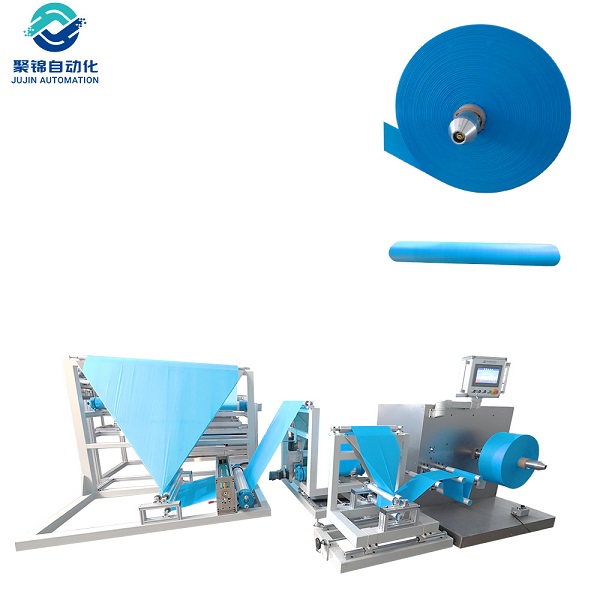
The practical reality is that most modern lines can do both. The extruder, slot die, chill roll, and nip are identical; the difference is whether a second unwind feeds the nip. An extrusion lamination machine with two unwinds and a switchable mode can coat a single web in one run and laminate two webs in the next. This is why machine buyers should confirm the number of unwinds, the available modes, and the substrate width they actually need before purchasing.
A typical nonwoven composite line for hygiene products illustrates the overlap. The web is usually a spunbond or SMS nonwoven, and the film is LDPE. In the coating mode, the film lands on the nonwoven to form the leak-proof backsheet used in diapers and sanitary napkins. In the lamination mode, a second web such as another nonwoven or a tissue is fed into the same nip, producing a bonded composite for wipes or medical products. The same line therefore serves both product families, which is why equipment flexibility is a real commercial advantage.
The choice between the modes is rarely fixed for a whole plant. A converter making diaper backsheets in the morning can switch to a two-web wipe composite after a changeover that takes minutes, as long as the machine stores recipes for both jobs. This flexibility is one reason full-servo lines with touchscreen recipe storage have become the standard in the hygiene sector: the hardware does not change, only the unwinds and the stored parameters.
Technical associations such as TAPPI, the technical association for the converting and packaging industry, maintain extensive extrusion coating knowledge that covers both coating and laminating modes on the same equipment.
The Pros and Cons of Extrusion Lamination for Non Woven Fabrics
Once the process is understood, the decision comes down to a balanced judgment. No single converting method is best for every product; each one trades one property against another. The advantages and limitations below reflect how the process behaves on real nonwoven materials in production, and they are the factors buyers weigh when comparing quotes.
The Pros
Glue-free, mechanically anchored bond. Because the polymer is molten when it meets the fabric, it flows into the fiber structure and locks on as it cools. There is no adhesive layer to fail, no solvent, and no drying oven. The bond is continuous across the full width, which is difficult to achieve with sprayed or coated adhesives.
Waterproof barrier in one step. A continuous polymer film is naturally waterproof and fluid-resistant, which is exactly what diaper backsheets, medical drapes, and packaging liners require.
High single-pass speed. Lamination happens in a single pass at high line speed, so the unit cost falls as volume rises. High-speed models are rated at 100 m/min and above.
Soft hand feel. Without a glue layer between the fabric and the film, the laminate stays flexible and drapable, an important property for hygiene and medical products.
Consistent quality with digital control. Servo-driven tension and touchscreen parameter entry keep the web flat and the coating uniform, reducing waste from stretching, wrinkling, and thickness variation.
From a cost perspective, the process removes entire cost centers from the bill of materials. There is no adhesive, no solvent, no coating station, and no drying oven; the polymer film is produced in line from pellets. For high-volume converting, the combination of lower material cost and single-pass speed is usually the deciding factor.
Recyclability potential. Mono-material structures, such as a PE film on a PE-based web, are easier to recycle than glued multi-layer composites, because no foreign adhesive has to be separated during reprocessing.
| Advantage | What It Means in Practice |
|---|---|
| Glue-free bond | Continuous mechanical bond, no adhesive or solvent cost |
| Waterproof barrier | Fluid-resistant surface formed in the same step |
| High speed | Single-pass output keeps unit cost low |
| Soft hand feel | No glue layer, flexible and drapable laminate |
| Consistency | Servo tension and digital control reduce waste |
| Recyclability | Mono-material structures are easier to recycle |
The Cons
Heat exposure of the fabric. The polymer must be hot enough to flow and bond, typically in the range of 270–330 °C for LDPE. Lightweight nonwovens can shrink, stiffen, or suffer fiber damage if the melt temperature is not matched to the substrate, so thin webs require careful parameter control. For webs below 30 g/m², operators typically run at the lower end of the window and shorten the air gap to limit the time the fiber spends near the melt.
Reduced breathability. A continuous film blocks moisture vapor. Breathability can be tuned with thinner coatings or modified resins, but it cannot reach the open structure of adhesive point bonding. Products that must pass air or moisture vapor, such as breathable apparel films, usually need perforated films or a different bonding route.
Coating thickness control. Uniform thickness depends on the die gap, extruder output, and line speed staying in balance. Getting this right takes process experience and, on older machines, constant operator attention. Modern machines close the loop automatically, holding the target weight by linking extruder speed to line speed.
Higher initial investment. An extruder, slot die, chill roll, and tension system cost more than a simple adhesive laminator. The payback comes from lower material cost and higher speed, not from a lower purchase price.
Limited pattern flexibility. The process produces a continuous film. Applications that need selective or patterned bonding are better served by adhesive lamination, which can apply glue only where it is needed.
Process expertise required. Temperature windows, nip pressure, air gap, and tension interact with each other. A manufacturer that provides parameter guidance and commissioning support reduces the learning curve significantly.
| Limitation | How It Affects Production |
|---|---|
| Heat exposure | Lightweight webs can shrink or stiffen if melt temperature is too high |
| Reduced breathability | Continuous film blocks vapor; only partly tunable |
| Thickness control | Requires balanced die gap, output, and line speed |
| Initial investment | Higher capital cost than adhesive laminators |
| Pattern flexibility | Continuous film; no selective or patterned bonding |
| Process expertise | Interacting parameters demand trained operators |
How the Trade-offs Translate into Real Products
The comparison becomes concrete when it is applied to products. A diaper backsheet needs a leak-proof film, high output, and a soft feel, which plays directly to the strengths of the process. A surgical drape needs fluid resistance and a barrier level that is formally graded; regulatory guidance on medical gowns explains the recognized barrier levels that such protective materials must meet. A breathable packaging or apparel fabric, by contrast, may be better served by adhesive point bonding, because a continuous film would block the vapor transfer the product needs.
The same reasoning applies to temperature-sensitive webs. If the substrate cannot tolerate the heat of a molten film, adhesive lamination or film lamination is the safer route. In short, lamination wins when the product needs a strong, continuous, waterproof bond at high volume; alternatives win when breathability, pattern, or heat sensitivity dominates the requirement.
The same technology serves three sectors with slightly different priorities. In hygiene products, the laminate forms the backsheet: a construction that must resist leakage while feeling soft against the skin, which favors a thin, low-weight coating. In medical products, drapes and gowns combine a liquid barrier with comfort for long procedures, so the film weight and the fabric basis weight are balanced against drape and breathability. In packaging, the laminate is chosen for its moisture barrier and mechanical strength rather than softness, which is why the coating is often thicker and the substrate heavier.
| Product Scenario | Recommended Process | Reason |
|---|---|---|
| Leak-proof hygiene backsheet | Extrusion coating or lamination | Continuous waterproof film, soft feel, high speed |
| Surgical drape or isolation gown | Extrusion coating or lamination | Continuous fluid barrier with a graded protection level |
| Breathable apparel or filter | Adhesive point bonding | Keeps the open, breathable structure |
| Temperature-sensitive web | Film or adhesive lamination | Avoids exposing the web to melt heat |
| Selective or patterned bond | Adhesive lamination | Glue can be applied only where needed |
The decision guide above covers the common cases, but unusual products need a closer look. A fabric that must remain highly elastic, or a web that contains heat-sensitive additives, may not survive the molten film. In such cases converters run a small trial before committing to equipment, because a failed bond on a production line costs more than a rejected sample.
What to Check Before Buying the Equipment
Buyers should start by defining the target product: the web width, the coating thickness range, the required output, and whether both coating and lamination modes are needed. These four answers narrow the equipment list faster than any other step. For buyers who have decided that the process fits their product, the equipment choice decides how many of the advantages are realized and how many of the limitations can be managed. A machine that stores recipes for several products, for example, turns the limited pattern flexibility of the process into a scheduling advantage rather than a constraint.
| Factor | What to Check |
|---|---|
| Coating vs. lamination mode | Number of unwinds; can the line coat, laminate, or both |
| Working width | Match the raw material width; compact lines commonly handle up to 600 mm |
| Production speed | Check the rated m/min; high-speed models reach 100 m/min |
| Thickness control | Die gap, extruder speed, and line speed must be adjustable |
| Tension control | Servo or cylinder-driven systems prevent stretching and wrinkling |
| Heat management | Confirm safe melt windows for lightweight nonwovens |
| Power supply | Match the local voltage, for example 380 V / 50 Hz |
| After-sales support | Warranty, installation guidance, spare parts, and training |
When purchasing an extrusion lamination machine in volume, buyers should ask for the full specification sheet, process parameters, and a trial run on their own material. Comparing coating uniformity and peel strength across shortlisted manufacturers is a practical way to verify quality before placing an order. A structured comparison of these points, together with the technical table above, gives a complete picture before any purchase decision. Ask also how the machine behaves on startup and shutdown, where most thickness variation occurs.
After-sales terms matter as much as the hardware. A standard warranty period, documented installation instructions, spare parts availability, and operator training are the practical signals of a reliable supplier. For a process with interacting parameters, commissioning support that helps the buyer reach stable coating weight in the first days usually pays for itself in reduced trial waste.
Conclusion
Extrusion coating and extrusion lamination are close relatives that serve different structures: coating adds a polymer layer to one web, while lamination bonds two webs with the polymer in between. For nonwoven converters, weighing the pros and cons of non woven extrusion lamination comes down to a few clear trade-offs: a strong, glue-free, waterproof bond at high speed, balanced against heat exposure, breathability limits, and higher initial investment. Products that need continuous barrier performance at volume benefit most from the process; products that need breathability or selective bonding may be better served elsewhere. For machine buyers, the practical questions are simple: one web or two, which coating range, what speed, and what after-sales support. A short trial with representative material remains the cheapest way to confirm the choice before committing capital. With the right machine and the right process parameters, lamination remains one of the most dependable ways to turn nonwoven fabric into a finished, high-performance composite.
Frequently Asked Questions
What are the pros and cons of extrusion lamination for non woven fabrics?
The main pros are a glue-free strong bond, waterproof barrier, high speed, and soft hand feel. The main cons are heat exposure of lightweight webs, reduced breathability, thickness control demands, and higher initial investment.
What is the difference between extrusion coating and extrusion lamination?
Extrusion coating applies a molten polymer layer onto a single substrate. In lamination, the polymer is extruded between two substrates, where it acts as the bonding layer and the middle layer of the composite.
Is extrusion lamination stronger than adhesive lamination?
For continuous, full-width bonds, the mechanical anchoring of a molten polymer is usually stronger and more consistent than a glue line. However, adhesive lamination allows selective and patterned bonding, which the process cannot do.
Can the process produce breathable nonwovens?
Yes, to a degree. Breathability is tuned through film thickness and resin choice, but a continuous film will always block more vapor than adhesive point bonding.
Does the heat damage nonwoven fabrics?
Lightweight nonwovens can shrink or stiffen if the melt temperature is too high. Matching the temperature to the substrate, typically in the 270–330 °C range for LDPE, keeps the risk under control.
Which polymers are used?
LDPE is the most common because it is soft, waterproof, and economical. LLDPE, PP, EVA, and EMA are used when toughness, heat resistance, or special adhesion is required.
What speed can a line reach?
Production speeds depend on machine design and material. High-speed extrusion lamination machines are rated at 100 m/min, which is typical of full-servo compact lines for hygiene and medical materials.
Looking for a Reliable Non Woven Extrusion Lamination Machine Manufacturer?
JUJIN Automation has 18 years of experience in non-woven machinery research and manufacturing. Its full-servo high-speed nonwoven composite machine laminates PE/PP film onto nonwoven fabrics at up to 100 m/min without chemical adhesives, with touchscreen control, a 3-ton welded frame, and global delivery support. Buyers can request specifications, process parameters, and sample trials before ordering.


