


From Baby Pads to Adult Incontinence Pads: The Multi-Functional Transformation of the Underpad Making Machine
Twenty years ago, a factory that produced baby changing pads rarely also produced adult nursing pads, and a factory built for hospital bed pads rarely touched the pet care market. Each product category demanded its own dedicated line, its own tooling, and its own capital outlay. That separation is disappearing. A new generation of underpad making machine platforms is now built to move fluidly between baby care, adult incontinence care, maternity care, and even pet hygiene products, using the same core frame, the same servo drives, and the same sealing system. For small and mid-sized converters looking to enter the fast-growing absorbent hygiene sector without buying three or four separate machines, this shift changes the entire investment calculation.
This article explains, in plain language, how a single underpad manufacturing machine is engineered to serve multiple markets at once, what technology makes that flexibility possible, and how factory owners can evaluate whether this type of equipment is the right fit for their business.
A single, well-designed underpad machine can switch between baby pads, adult incontinence pads, maternity pads, and pet training pads by adjusting size and material parameters on the touchscreen, without buying separate equipment for each market.
Full-servo tension control and ultrasonic edge sealing are the two technologies that make multi-product output possible while keeping quality consistent.
The global adult incontinence products market is projected to grow from roughly USD 17.2 billion in 2025 to USD 27.4 billion by 2034, which means demand for flexible underpad manufacturing machine capacity is only increasing.
Because one line covers several product categories, the equipment tends to reach payback faster than single-purpose machines, making it attractive for smaller factories with limited floor space and capital.
Buyers should evaluate sealing method, tension control, size range, and after-sales support before selecting an underpad making machine supplier.
Why the Underpad Machine Has Become a Multi-Market Asset
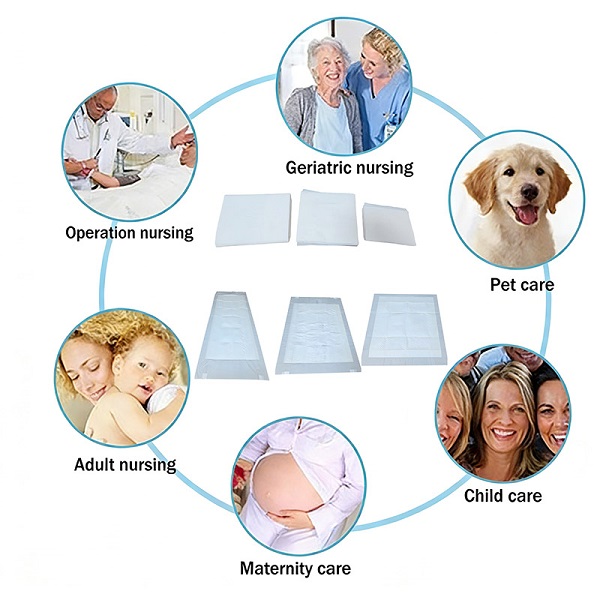
Baby changing pads, adult nursing pads, hospital bed protectors, maternity underpads, and pet training pads look different on a store shelf, but structurally they are close cousins. Each one is built from the same basic sandwich: a waterproof bottom film, an absorbent core of fluff pulp or non-woven tissue, and a soft top layer, all sealed together along the edges. Because the underlying construction is so similar, a machine that can accurately control web tension, position the core, and seal the perimeter can, in principle, produce any pad in this family simply by changing the roll widths, the cutting length, and the folding pattern.
This is exactly the logic behind the modern multi-functional underpad making machine. Instead of buying a baby-pad-only line, an adult-pad-only line, and a pet-pad-only line, a factory owner can run one flexible underpad production line and reprogram it for a new product category in minutes through the touchscreen HMI. That flexibility is particularly valuable right now, because demand across every one of these categories is rising at the same time: aging populations are driving adult incontinence demand, birth rates in several developing regions remain steady, and pet ownership continues to expand in urban markets worldwide.
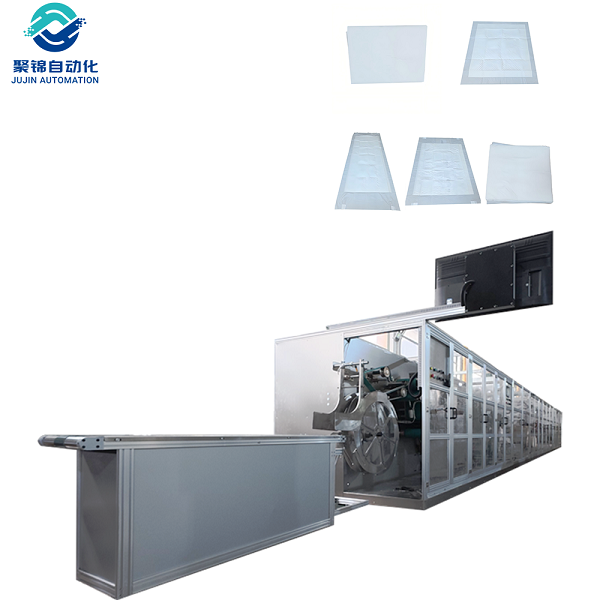
Inside the Technology: What Makes One Machine Work Across Product Lines
Turning a single frame into a genuine multi-product underpad manufacturing machine requires four things to work together precisely. Below is a plain-language breakdown of each one.
1. Full-Servo, Zero-Tension Material Feeding
Older mechanical converting lines rely on shared drive shafts and mechanical clutches, which stretch thin films and tissue unevenly as speed or material weight changes. A full-servo underpad machine instead gives each unwind station — the PE bottom film, the absorbent core, and the top non-woven — its own independently controlled servo motor with automatic cylinder-driven tension control. This means the machine can unwind a light baby-pad tissue and a heavier adult-pad core on the same equipment without wrinkling, tearing, or misaligning the layers, simply by adjusting the tension parameters on screen.
2. Ultrasonic Edge Sealing
The seal along the edge of a pad is what keeps fluid from leaking out, and it is also the part of the pad that touches skin most directly. Rather than using hot glue lines, which can feel stiff and occasionally irritate sensitive skin, high-frequency ultrasonic welding bonds the top and bottom films together using vibration-generated heat. The result is a soft, continuous, leak-resistant seal that works equally well on a thin baby pad and a thicker adult nursing pad, which is one of the main reasons ultrasonic sealing has become the cross-category standard.
3. Multi-Layer Lamination for Different Absorbency Needs
Baby pads generally need lighter absorbency and a softer hand-feel, while adult incontinence pads and hospital bed pads need heavier fluid retention over longer periods of use. This flexibility is handled by allowing the core weight, core width, and lamination pressure to be adjusted independently, so the same converting line can laminate a light tissue core for baby products in the morning and a denser cotton or fluff-pulp core for adult products in the afternoon.
4. Smart Auto-Folding and Stacking
Downstream packaging requirements differ by market too — retail baby pads are often sold flat in small packs, while institutional adult pads and hospital pads are usually shipped pre-folded in bulk cases. An automated 3-fold horizontal folding module lets the operator switch fold patterns from the same touchscreen used to set tension and sealing parameters, so the machine outputs pads that are already shaped for the intended distribution channel.
Comparing the Three Core Applications
The table below shows, in simple terms, how the same underpad making machine platform typically adapts its settings across the three largest end markets.
| Application | Typical Finished Size | Absorbency Priority | Common Sealing Need |
|---|---|---|---|
| Baby & Maternity Changing Pads | 300–400mm (L) x 200–280mm (W), lighter core | Moderate, fast surface dryness | Soft ultrasonic seal, gentle on infant skin |
| Adult Nursing & Incontinence Bed Pads | 300–400mm (L) x 200–280mm (W), heavier core | High, extended wear or overnight use | Leak-proof ultrasonic seal, higher durability |
| Pet Training & Cage Liner Pads | Similar dimensions, adjustable per breed/use | High liquid-locking performance | Reinforced edge seal for repeated pressure |
Technical Snapshot: What a Full-Servo Underpad Production Line Looks Like
To make the multi-market flexibility concrete, here are representative specifications for a full-servo production line designed to run 100 pieces per minute across product categories.
| Parameter | Typical Value |
|---|---|
| Production Speed | Up to 100 pcs/min |
| Power Supply | 380V, 50Hz |
| Total Installed Power | ≈26.5 kW |
| Finished Product Length Range | 300–400 mm (adjustable) |
| Finished Product Width Range | 200–280 mm (adjustable) |
| Sealing Method | Adhesive core lock + ultrasonic longitudinal & transverse sealing |
| Tension Control | Independent servo motors with automatic cylinder-driven tension |
| Folding | Automated horizontal 3-fold system |
| Control Interface | Touchscreen HMI, parameter-based changeovers |
Reference specifications based on a full-servo medical underpad production line configuration; exact figures vary by model and order requirements.
The ROI Case: Why This Model Suits Small and Mid-Sized Factories
For a small or mid-sized converting factory, the appeal of a multi-functional underpad making machine is straightforward math. Buying three separate single-purpose machines means three sets of floor space, three maintenance contracts, three operator training programs, and three separate capital outlays — while each machine may sit idle whenever demand for its one product category softens. A single flexible line spreads that same capital across multiple revenue streams and keeps utilization high, because when baby-pad orders slow down, the same equipment can be reprogrammed to run adult incontinence pads or pet pads instead.
This matters more than ever because the underlying demand curve keeps climbing. Global market research shows the adult incontinence products sector alone was valued at roughly USD 16.4 billion in 2024 and is forecast to reach about USD 27.4 billion by 2034, a compound annual growth rate near 5.3 percent, driven largely by aging populations and rising healthcare access worldwide1. Clinical literature also confirms just how widespread the underlying need is: an estimated 423 million adults worldwide experience some form of urinary incontinence, and prevalence exceeds 50 percent among nursing-home residents2. Every one of those cases represents recurring, non-discretionary demand for absorbent pad products — a very different demand profile from seasonal or fashion-driven goods.
| Cost Factor | Three Separate Single-Purpose Machines | One Multi-Functional Underpad Machine |
|---|---|---|
| Floor Space Required | High (3 production zones) | Lower (1 production zone) |
| Capital Investment | Multiplied across machines | Concentrated in one line |
| Idle-Time Risk | High if one category slows | Lower — reprogram to another category |
| Operator Training | Separate training per machine | Single control logic to learn |
| Time to Market Entry (new category) | Months (new equipment purchase) | Hours to days (parameter changeover) |
Quality, Hygiene, and Compliance Considerations
Because underpads are worn against skin or used in medical and care environments, quality consistency is not optional. A dependable machine should maintain stable seal strength and absorbency across every changeover, not just at the start of a production run. Ultrasonic sealing helps here because it produces a consistent, glue-free bond that does not degrade with humidity or temperature swings the way some adhesive seals can. Buyers producing for hospitals, elder care facilities, or export markets should also confirm that raw materials (PE film, tissue, absorbent core) meet the hygiene and safety standards required in their destination market, and that the machine itself is CE-compliant where applicable.
How to Evaluate an Underpad Making Machine Before You Buy
Not every machine advertised as "multi-purpose" actually performs consistently across product categories. Before purchasing, factory owners should check the following:
Tension control type — Independent servo-driven tension per material roll is far more reliable than shared mechanical drives when switching between lightweight and heavyweight materials.
Sealing technology — Ultrasonic sealing generally outperforms hot-glue sealing for comfort, leak resistance, and long-term consistency.
Adjustable size range — Confirm the actual length and width range the machine supports, since this determines how many product categories it can genuinely serve.
Changeover speed — Ask how long it takes to switch from one product specification to another; touchscreen parameter changes should take minutes, not hours.
Supplier track record and after-sales support — Installation guidance, spare parts availability, and warranty terms matter as much as the machine's raw specifications, especially for factories new to hygiene-product manufacturing.
Conclusion
The line between baby care, adult care, and pet care manufacturing is blurring at the equipment level, and that is good news for smaller factories. A modern, full-servo underpad making machine with ultrasonic sealing and flexible size settings allows one production line to chase demand across several growing markets instead of betting everything on a single product category. As global demand for absorbent hygiene products continues climbing, this kind of flexible, fast-payback equipment is becoming less of a luxury and more of a standard starting point for new and expanding converters alike.
Looking for a Reliable Underpad Machine Manufacturer?
JUJIN designs full-servo underpad production lines built to move between baby pads, adult incontinence pads, and pet care pads on one flexible platform. Talk to our engineers about your target output, product sizes, and budget.
Request a Free QuoteFrequently Asked Questions
Q1: Can the same underpad machine really produce both baby pads and adult incontinence pads?
Yes. Because both products share the same basic layered structure, a full-servo underpad machine can switch between them by adjusting web tension, core weight, cutting length, and width through the touchscreen — no separate machine is required.
Q2: How long does it take to change the machine from one pad size to another?
On a touchscreen-controlled machine like this, most size and specification changes take only minutes, since parameters are entered digitally rather than adjusted mechanically part by part.
Q3: Why is ultrasonic sealing preferred over glue sealing for underpads?
Ultrasonic welding creates a soft, continuous, leak-resistant bond without hard glue lines, which improves comfort against skin and tends to hold up more consistently across humidity and temperature changes.
Q4: Is a multi-functional underpad making machine a good fit for a small factory?
Generally yes. Because one line can serve several product categories, small and mid-sized factories can spread their investment across multiple revenue streams instead of committing capital to a single-purpose machine, which typically shortens payback time.
Q5: What production speed should I expect from a full-servo underpad production line?
Many current full-servo lines run at speeds up to around 100 pieces per minute, though actual output depends on product size, material type, and the specific machine configuration.
Q6: What should I check before choosing an underpad machine manufacturer?
Compare tension control technology, sealing method, adjustable size range, changeover speed, and the supplier's after-sales support and warranty terms before making a final decision.
Sources: [1] Global Market Insights, Adult Incontinence Products Market Analysis & Forecast. [2] National Institutes of Health, NCBI Bookshelf, Urinary Incontinence – StatPearls.


