


How a Toilet Seat Cover Making Machine Works: Step-by-Step Process
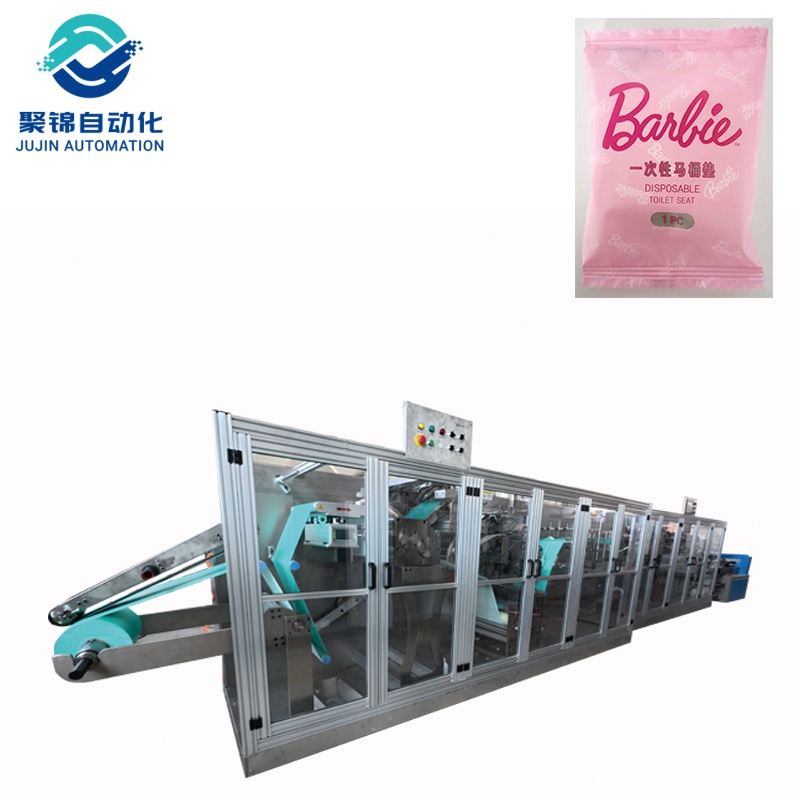
That slim, pocket-sized toilet seat cover beside the dispenser in a hotel bathroom or an airport restroom is not sewn by hand. It is mass-produced by a single piece of industrial equipment. In seconds, a toilet seat cover making machine turns rolls of nonwoven fabric into finished, folded, ready-to-pack covers — feeding, bonding, punching, cutting and folding in one continuous run. This article explains how this equipment works step by step, in plain language that buyers, plant managers and first-time readers can all follow.
Key Takeaways
A toilet seat cover making machine is an automated converting system that turns nonwoven fabric — often combined with a PE film or a release paper layer — into finished disposable toilet seat covers.
The core sequence is the same across designs: unwinding, bonding or gluing, punching and cutting, folding, and output, with every stage synchronized by a PLC control system.
Two mainstream technologies dominate: ultrasonic welding for soft dual-layer covers, and spray-adhesive application for covers with release-paper backing.
Most automatic machines run at about 80–100 pieces per minute and are operated by just one or two workers.
Precise tension control and servo synchronization are the two factors that decide whether the covers come out smooth, correctly sized and at a high qualified rate.
What Is a Toilet Seat Cover Making Machine?
It is a piece of converting equipment that takes rolls of raw material and automatically shapes them into single-use toilet seat covers. It is also described as a toilet seat cover machine, a nonwoven toilet seat cover production line, or the core unit of a disposable hygiene converting workshop. The essential point is that no manual cutting, no hand sealing and no intermediate handling are needed between cycles: the machine feeds the material, forms the cover, seals or glues it, cuts it free, folds it into a compact pocket and delivers it to the next station, all in a continuous flow.
These machines are installed in factories that supply hotels, airports, shopping malls, hospitals, event venues and retail chains — any business that needs a clean barrier for every restroom user. Because the finished product is used once and discarded, the equipment is engineered for high speed, low labor input and consistent quality at a low unit cost.
What Goes Into a Disposable Toilet Seat Cover?
Understanding the machine starts with understanding the material. The main raw material is nonwoven fabric — a sheet of fibers bonded together by heat, pressure or chemicals instead of being woven or knitted. Most covers use polypropylene (PP) spunbond nonwoven, valued for its softness, strength and low cost. Fabric weight, measured in grams per square metre (g/m², also called GSM), is the key specification, and the internationally recognized method for measuring it is defined by the international nonwovens test methods; background on how these engineered fabrics are made and used is published by the nonwovens industry association.
| Material | Role in the Cover | Typical Specification |
|---|---|---|
| PP spunbond nonwoven | Soft, skin-friendly top layer | Commonly 18–30 g/m²; roll width around 800 mm |
| PE film | Waterproof barrier layer | Thin film, typical thickness 15–30 µm; roll diameter up to about 1,000 mm |
| Laminated nonwoven / paper | Base layer for glued covers | Expansion size around 62 × 65 cm on typical models |
| Release paper (silicone coated) | Protects the adhesive backing | Roll diameter up to 40 cm; width 1.5–2.5 cm |
The choice of material combination determines which production route the machine uses, as explained below.
How the Process Works, Step by Step
Inside a modern toilet seat cover making machine, the process follows a fixed, synchronized sequence. Each station is timed with the others by the control system so the material never stops moving. Factories mainly use one of two routes, depending on the cover design.
Route 1: Ultrasonic Welding (Dual-Layer Nonwoven + PE Film)
Unwinding. Rolls of nonwoven fabric and PE film are mounted on the material rack. Roll diameters up to about 1,000 mm are common, because a bigger roll means fewer changeovers per shift.
Edge binding. Ultrasonic horns seal both edges of the web. High-frequency vibration, typically around 20 kHz, melts and fuses the fibers so the edges are smooth, sealed and leak-proof — no thread, no glue, no needle holes.
Lamination. The nonwoven top layer and the PE bottom film are welded together into a single composite web, creating a soft surface with a 100% waterproof backing.
Embossing. A pattern is pressed into the upper and lower layers, which improves texture and helps the cover stay in place on the seat.
Composite molding and punching. The cover shape — including the inner opening — is formed by precision tooling that is synchronized with the material feed.
Cutting. Each individual cover is separated from the continuous web. Sealing and cutting happen in the same cycle, so the cut edge is already sealed and will not fray.
Folding and output. Three consecutive transverse folds compress the cover into a compact, pocket-sized square, ready to be delivered to a flow-wrapping or packaging machine.
Route 2: Adhesive Application (Laminated Nonwoven + Release Paper)
Unwinding. The laminated nonwoven base and a silicone-coated release paper strip are fed into the line under constant-tension control.
Positioning adhesive application. A spray adhesive system applies glue only where it is needed. Servo-controlled positioning and suction-drum transfer keep the adhesive pattern accurate, so the finished cover unfolds flat and sticks firmly when used.
Mold punching. A high-speed steel mold roller cuts the cover shape, including the center opening. On modern lines the cutting-size error is held within 3 mm.
W-type folding. The cover is folded in a W pattern to fit the compact packaging format.
Cutting. Each cover is separated from the web with synchronized tooling.
Continuous three-time folding. Further folds compress the cover into its final retail size.
Packaging connection. The finished covers are conveyed to the packaging machine for automatic wrapping, completing a touch-free production cycle.
Ultrasonic Welding vs. Adhesive Application
Both technologies are proven at industrial scale, and neither is inherently superior — the right choice depends on the product design, the target market and the material budget.
| Factor | Ultrasonic Welding | Adhesive Application |
|---|---|---|
| Bonding method | High-frequency vibration melts and fuses layers together | Spray adhesive applied with servo-controlled positioning |
| Best suited for | Soft dual-layer nonwoven + PE film, waterproof covers | Release-paper backed covers that stick to the seat |
| Edge quality | Smooth, sealed, no glue residue | Depends on adhesive accuracy |
| Typical speed | 80–100 pieces per minute | 80–100 pieces per minute |
| Quality control | Permanent weld, consistent seam strength | Qualified rate of 99% or higher on servo-controlled lines |
| Main consumables | Electricity only | Adhesive and release paper |
Main Components of the Machine
Every machine of this type is built around the same set of modules. Each part has a specific role, and a misalignment in any one of them can affect the quality of every cover produced.
| Component | Primary Function | Key Feature on Modern Machines |
|---|---|---|
| Material Rack (Unwinding) | Supports and unwinds raw material rolls | Handles nonwoven and PE rolls up to about 1,000 mm in diameter |
| Tension Control System | Keeps the web feeding at constant, low tension | Automatic cylinder-driven control; prevents wrinkles and stretching at high speed |
| Servo Feed Rollers | Control material advance speed and finished size | Servo-synchronized with sealing and cutting to a fraction of a millimetre |
| Sealing / Adhesive Unit | Bonds the layers (ultrasonic) or applies glue (adhesive route) | Around 20 kHz ultrasonic welding, or spray adhesive with suction-drum transfer |
| Punching and Cutting Module | Forms the cover shape and separates each piece | Mold steel tooling; cutting-size error within 3 mm |
| Folding System | Compacts the cover for packaging | W-type and three-fold transverse folding, fully automatic |
| PLC Touchscreen Panel | Central control and programming | Digital input for size and speed changeover within minutes |
How Quality Is Maintained at High Speed
Producing 80–100 covers per minute is not a matter of luck. Three factors decide output quality. First, tension control: lightweight nonwoven and thin PE film stretch easily, so an automatic tension system keeps both webs feeding at the same rate — otherwise the film wrinkles or the cover dimensions drift. Second, servo synchronization: the feed, sealing, punching and cutting units are electronically linked, which is why a modern line can hold cutting error within 3 mm while running continuously. Third, process monitoring: finished covers are counted and checked automatically, and qualified rates of 99% or higher are standard on servo-controlled adhesive lines.
Safety matters on the factory floor as well. Every machine with moving parts should be properly guarded, and occupational safety authorities publish detailed machine guarding guidance that any plant operating converting equipment should follow. On the product side, the hygiene purpose of these covers aligns with established public hygiene guidance on cleanliness in shared facilities.
Day-to-day operation is straightforward. An operator mainly monitors the touchscreen, loads new material rolls and checks the folded output periodically; when the product size or folding pattern changes, the new parameters are entered digitally and the line adjusts itself within minutes, so changeover between batches costs time, not mechanical re-tooling.
Key Specifications to Evaluate Before Buying
When comparing suppliers and pricing, buyers should check the following parameters to make sure the equipment matches their production plan, factory conditions and budget.
| Specification | What to Look For | Typical Range |
|---|---|---|
| Production speed | Must cover your planned daily volume | 80–100 pieces per minute on automatic lines |
| Finished product size | Must cover your target cover dimensions | About 700 × 150 mm folded; around 62 × 65 cm expanded |
| Raw material rolls | Larger rolls mean fewer changeovers | Nonwoven roll diameter up to 1,000 mm; release paper up to 40 cm |
| Power supply | Must match factory voltage | 380 V / 50 Hz, 7–15 kW depending on model |
| Bonding technology | Ultrasonic or adhesive, matching your product | Around 20 kHz ultrasonic; spray adhesive with servo positioning |
| Qualified rate | Reject level affects cost per piece | 99% or higher on servo-controlled lines |
| Operators required | Lower labor means lower running cost | 1–2 operators per fully automatic line |
Where Disposable Toilet Seat Covers Are Used
A single machine model can serve many end markets, because the same core process — feeding nonwoven, bonding, cutting, folding — applies to most single-use cover designs. Typical applications include:
Hospitality and travel: hotels, airports, high-speed trains and cruise ships that need a fresh barrier for every guest.
Medical and maternity care: hospital wards and outpatient clinics where vulnerable patients need extra protection.
Public restrooms and events: shopping malls, amusement parks, stadiums and large gatherings that must maintain high sanitation standards.
Retail and e-commerce: portable packs sold for personal travel use and household bathrooms.
Looking for a Reliable Manufacturer?
For buyers, the equipment is only half the decision — the manufacturer behind it matters just as much. A reliable toilet seat cover making machine manufacturer provides verifiable specifications, transparent pricing, clear delivery terms and after-sales support, from installation guidance to spare parts and warranty. JUJIN is a direct source-level manufacturer of both ultrasonic models and automatic glued models, with a 12-month mechanical parts warranty and on-site engineer dispatch available on request. Send your requirements for a detailed quotation and factory price before you commit.
Get a Quote NowConclusion
A toilet seat cover making machine is a compact example of modern industrial automation: inexpensive rolls of nonwoven fabric go in, and sealed, folded, ready-to-pack sanitary covers come out at a steady pace with very little labor. The material science of polypropylene nonwoven explains why the product can be soft, strong and cheap at the same time, while ultrasonic welding or precision adhesive application and servo-driven tension control explain how quality stays consistent at high speed. For any business that needs disposable toilet seat covers in volume, this equipment offers a direct path from raw material to finished product at a predictable cost per piece.
Frequently Asked Questions
What is a toilet seat cover making machine?
An automated converting machine that turns rolls of nonwoven fabric — plus PE film or release paper — into finished disposable toilet seat covers through unwinding, bonding or gluing, punching, cutting and folding, with very little manual labor.
How many covers can it produce per minute?
Typical automatic machines run at about 80–100 pieces per minute; some models are rated higher or lower depending on cover size and design.
Which is better: ultrasonic welding or adhesive application?
Neither is universally better. Ultrasonic welding suits soft dual-layer nonwoven and PE film covers; adhesive application suits covers with release-paper backing that stick to the seat. The choice depends on the product design and target market.
Can one machine produce different sizes and styles?
Yes. PLC-controlled machines let operators change cover length, sealing parameters and folding settings on the touchscreen, usually within minutes and without mechanical retooling.
What raw materials are needed?
Polypropylene (PP) spunbond nonwoven fabric, PE film, and optionally release paper and spray adhesive, depending on which production route the machine uses.
Can it connect to a packaging machine?
Yes. The output conveyor is designed to dock with flow-wrapping or packaging machines, forming a fully automatic, touch-free production line.
How many workers are needed to operate it?
A fully automatic line typically needs one or two operators, mainly for material roll changes and routine supervision.


